THE ALTIUS ARCHIVE
NINE CONFERENCES · OXFORD
Across successive gatherings in Oxford, Altius has returned to questions whose consequences unfold over decades rather than news cycles. Each conference began with one central problem and examined it through science, technology, economics, politics, philosophy and culture.

Participants gathered in Oxford during an Altius conference.
01
Global Perspectives 2050
Trends and Governance in the Next Half Century
How should societies govern transformations whose consequences extend beyond a generation?
The first Altius conference looked beyond immediate events to the forces likely to shape the following decades. It treated philosophy, governance, science and technology as interdependent ways of understanding how societies might change — and how they might retain the capacity to choose their direction.
02
The Extension of Life
Challenges and Opportunities of Living Longer Lives
What happens when longer lives outgrow the institutions built around a shorter human lifespan?
Longer lives are both a scientific achievement and a transformation of society. The conference considered what greater life expectancy would mean for demography, governance, institutions and the organization of human life.
03
Artificial Intelligence, Robotics, Governance and Politics in the Age of Thinking Machines
Before generative AI entered public life, Altius considered the path from narrow to broader intelligence and the implications of thinking machines for employment, inequality, security, governance, cities, freedom, rights, consciousness and human purpose.
The 2026 conference now returns to that inquiry after many of its premises have moved from anticipation toward lived reality.
The Brain of the Future
THE INQUIRY TO WHICH HUMANITY’S MAGNUM OPUS NOW RETURNS
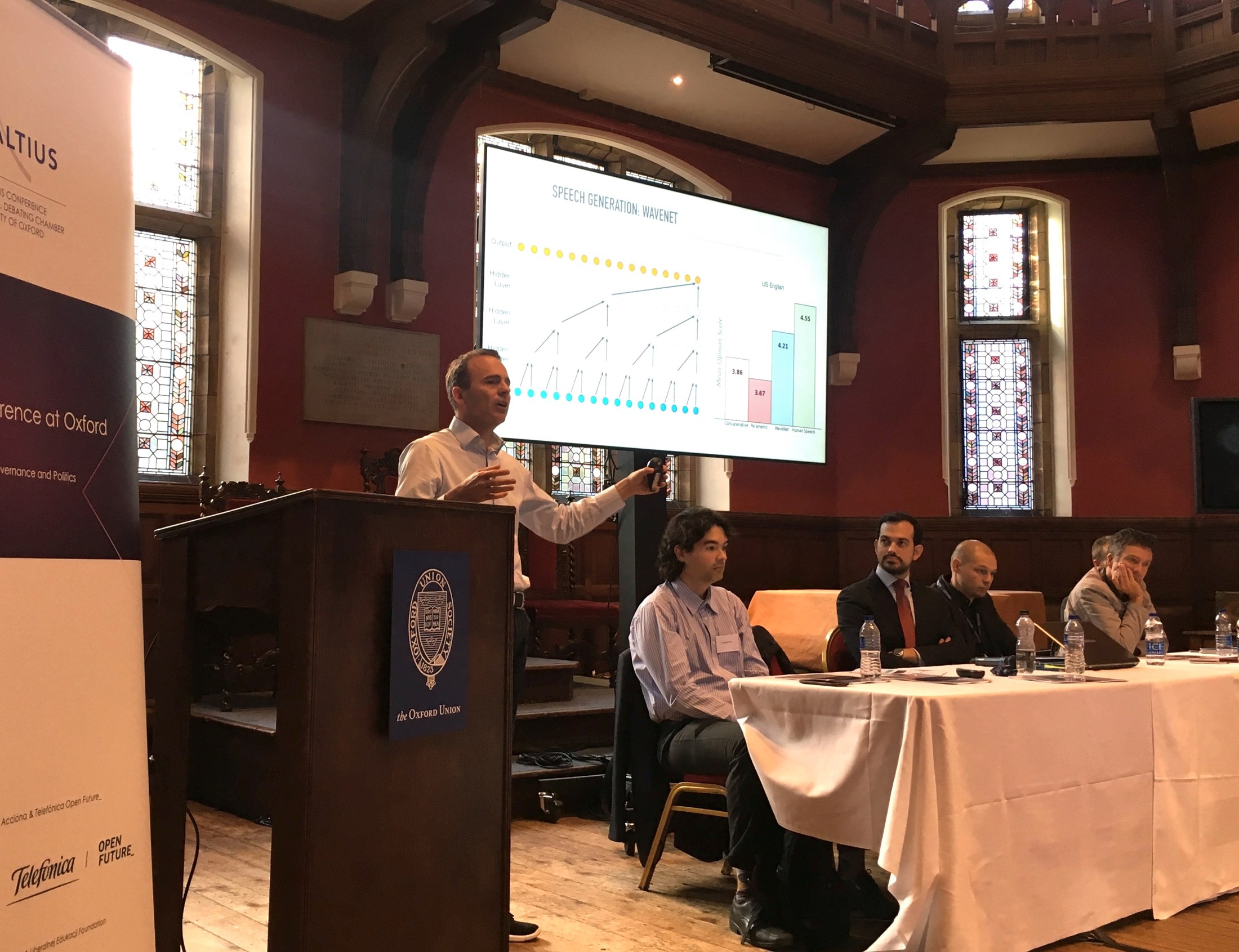
Shane Legg presenting WaveNet during “The True Potential of AI, Robotics and Automation: What to Expect in the Coming Two Decades.”

The Brain of the Future at the Oxford Union, returning to questions that shape the 2026 conference.

Gao Xingjian — dinner keynote: “Calling for a Renaissance in Literature and Arts.”

Eric Maskin — keynote: “Mechanism Design and Parallel Processing in the Brain.”
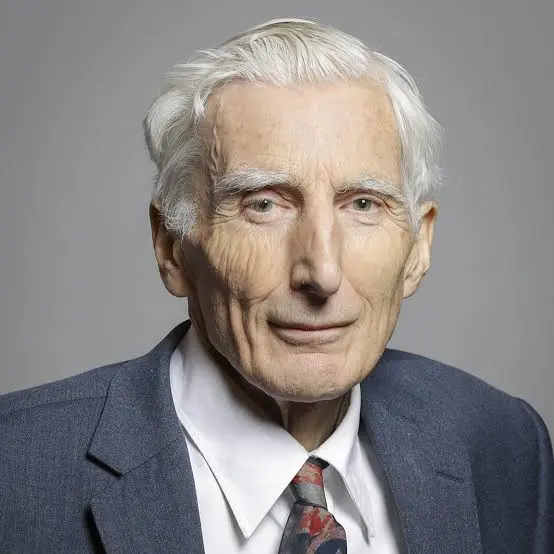
Lord Martin Rees — keynote: “Looking Beyond 2050: Challenges and Opportunities for Humanity.”
SELECTED PARTICIPANTS · SHANE LEGG · ERIC MASKIN · LORD MARTIN REES · GAO XINGJIAN · JEAN-PIERRE CHANGEUX · ERIK BRYNJOLFSSON · BARONESS NEVILLE-JONES · CARLO RATTI
04
The Future of Communication
An Opportunity for Humankind and a Challenge to Democratic Societies in the Age of Technological Disruption and the Rise of the Human-Machine Collective Mind
Can communication technologies enlarge human cooperation without weakening democratic life?
As communication became increasingly networked, decentralized and machine-mediated, the conference examined both its capacity to enlarge human cooperation and its power to disrupt democratic societies.
It asked what happens to knowledge, trust, media, identity, political participation and collective judgment when communication infrastructure reshapes the public sphere.
The Future of Communication

Sir Michael Atiyah during the long-term philosophical debate on human identity, perception and communication.

Harold Varmus — closing address: “Promoting Open Communications in the Sciences.”

Lawrence Lessig — opening keynote: “We the People, and the Republic We Must Reclaim.”

Dinner and dialogue at Pembroke College during The Future of Communication.

Sheldon Glashow — opening address: “The Future of Science and Humanism in Democratic Societies: Recovering Intellectual Authority in the 21st Century.”

Finn Kydland — opening keynote: “The Growth of Nations: Who Is to Blame: Productivity Growth or Our Political System?”

Carlos Blanco and Antoine Levy in discussion with Finn Kydland following his keynote, “The Growth of Nations: Who Is to Blame: Productivity Growth or Our Political System?”

Pío Cabanillas and Antonio Garrigues in conversation during The Future of Communication; Garrigues delivered the keynote “Science, Technology and Law.”

Antonio Garrigues debating with Sir Michael Atiyah and Sheldon Glashow during The Future of Communication.

Monsignor Paul Tighe — dinner keynote: “Compassionate Disruption: Humanizing Social Media.”

Pío Cabanillas and Monsignor Paul Tighe in conversation following Tighe’s keynote, “Compassionate Disruption: Humanizing Social Media.”
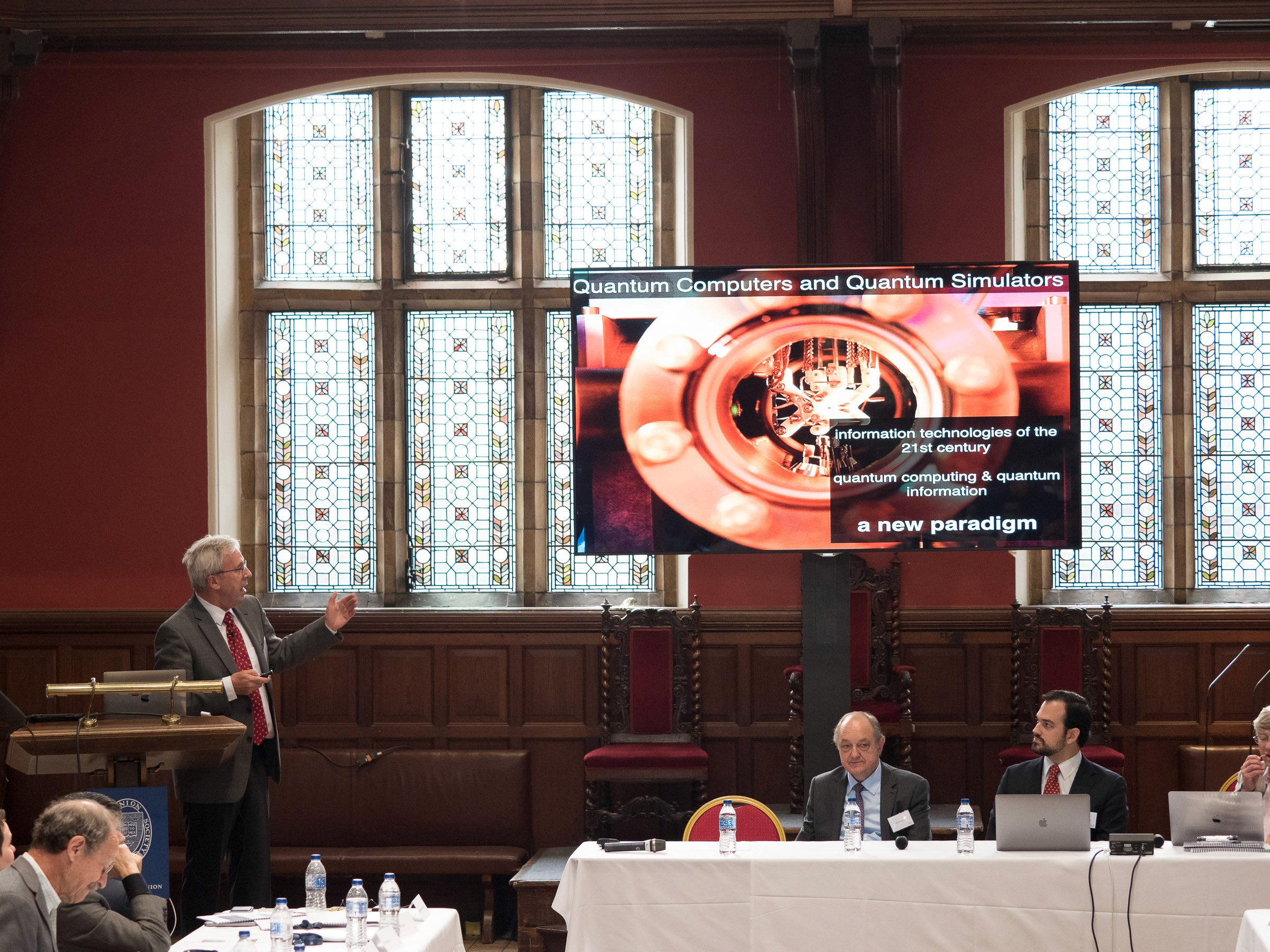
Peter Zoller — opening keynote: “Towards a Quantum Leap in Computing and Communication.”

Joan Glashow and Sir Michael Atiyah at New College, Oxford, during The Future of Communication.
SELECTED PARTICIPANTS · SIR MICHAEL ATIYAH · SHELDON GLASHOW · HAROLD VARMUS · FINN KYDLAND · LAWRENCE LESSIG · PETER ZOLLER · MONSIGNOR PAUL TIGHE · ANTONIO GARRIGUES · PÍO CABANILLAS · CARLOS BLANCO
05
Empowering the Human Mind and Redefining Values and Citizenship in the Age of Technological Disruption
Education was treated not only as the transmission of knowledge, but as the formation of judgment, values and citizenship.
The conference asked what people should learn, how institutions should adapt, and what forms of human agency and discernment become more important in an age of technological disruption.
Educating for the Future

Peter Agre — opening address: “The Role of Science and Education for the Future of Democratic Societies in the 21st Century.”

Oliver Hart — opening keynote: “Does Serving Shareholders Mean Putting Profit Above All Else?”
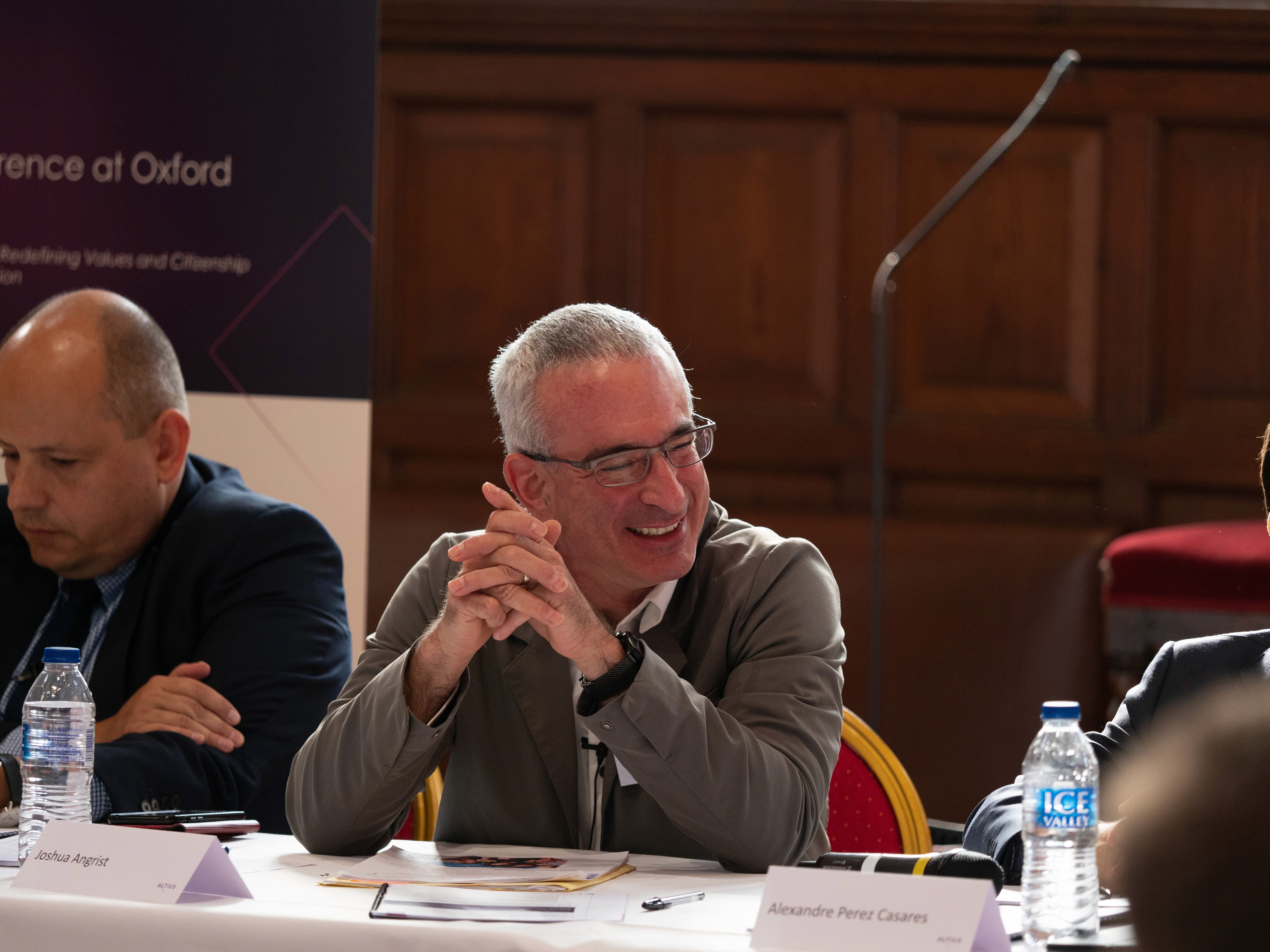
Joshua Angrist — keynote: “Undergraduate Econometrics Instruction: Through Our Classes, Darkly.”
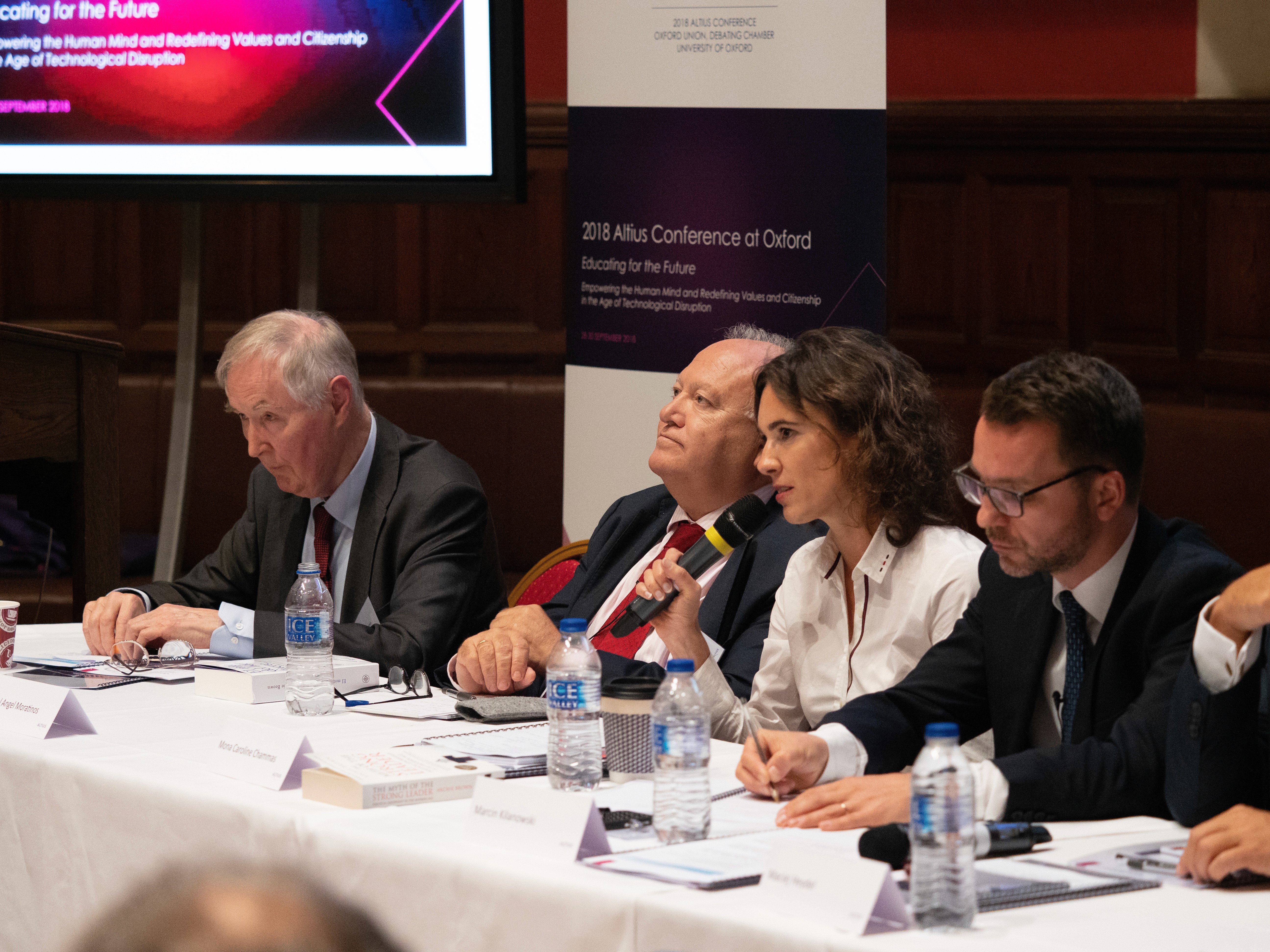
Miguel Ángel Moratinos, Archie Brown, Mona Caroline Chammas and Marcin Kilanowski during the global-governance panel: Moratinos spoke on “Towards a New Paradigm of Multilateralism for a Viable ‘New World Order’,” Brown on “Political Leadership in the 21st Century,” and Kilanowski on “The Age of Responsibility”; Mona Caroline Chammas chaired the session.

Manuela Veloso — speaker in “Educating in a World Driven by Artificial Intelligence (AI),” the conference section on state-of-the-art AI and education technologies.

Sir Richard Roberts in discussion with guests in Oxford; his dinner keynote was “The Future of Advocacy: When Science and Research Are Not Enough. The Case of GMOs.”
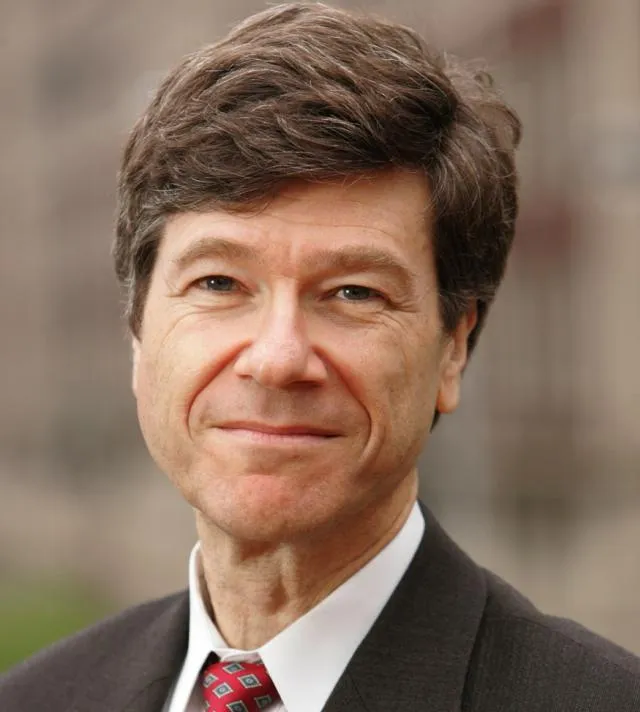
Jeffrey Sachs — keynote: “Sustainable Development by Design: Technology, Policy, Politics and Ethics.”
SELECTED PARTICIPANTS · PETER AGRE · OLIVER HART · MANUELA VELOSO · JOSHUA ANGRIST · JEFFREY SACHS · SIR RICHARD ROBERTS · MIGUEL ÁNGEL MORATINOS · ARCHIE BROWN · MONA CAROLINE CHAMMAS · MARCIN KILANOWSKI
AN ENDURING METHOD
Begin with a consequential question. Bring disciplines that rarely share the same room into direct conversation. Test first principles against scientific evidence, political reality and institutional choice.

Dinner and debate at Balliol College, Oxford.
06
Is Democracy the Right Model? Towards a New Social Contract in the Age of Cognitive Machines
Building on the preceding inquiries, the conference asked whether inherited democratic institutions and social contracts could remain viable amid technological disruption, inequality, fragmented communication and cognitive machines.
It examined participation, governance, ownership, economic organization and the possibility of a new social contract.
Organizing Society for the 21st Century

David Gross — opening address: “Truth, Democracy and the Scientific Method.”

Belén Romana and David Gross during the dining-hall debates; Gross opened the conference with “Truth, Democracy and the Scientific Method.”

Javier Solana and Alexandre Perez Casares, President of Altius, in discussion following Solana’s opening keynote for “The Future of our Political System”: “The Powerlessness of the Most Powerful: Winds of Change in Global Power.”

Joanna Bryson speaking on “Artificial Intelligence and the Human Economy.”
SELECTED PARTICIPANTS · DAVID GROSS · JAVIER SOLANA · JOANNA BRYSON · BELÉN ROMANA · ANTOINE BORDES · NIGEL TOON · SASKIA SASSEN
A QUESTION RETURNS
In 2016, The Brain of the Future asked what thinking machines would bring. A decade later, Humanity’s Magnum Opus asks not only what intelligent machines will become, but what civilization must become around them.
EXPLORE THE 2026 CONFERENCE